Ogham in Assassin's Creed Valhalla is more historically grounded than most game scripts get: real personal names, a genuine MAQI...MUCOI formula, and a consulted Celticist, alongside one very fictional King Arthur cameo. Here's what the game gets right, what it invents, and how a real ogham stone compares.
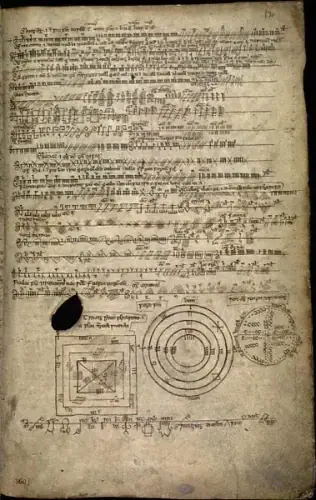
Byrhtferth's ogham signature is a line of cryptic ogham letters hidden inside an 11th-century English monk's diagram of the universe, the earliest ogham text known from any manuscript, and scholars still disagree on what it says.
Norse ogham inscriptions from Orkney and Shetland show Ireland's ancient script surviving deep into the Viking Age, carved by people who also spoke Old Norse.
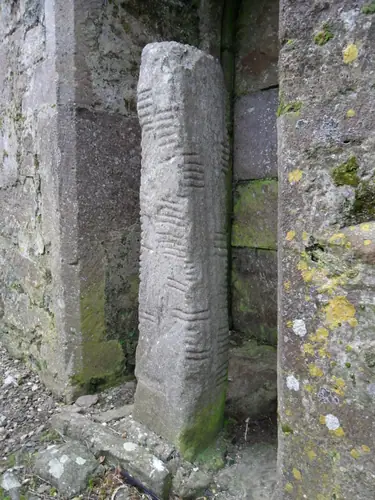
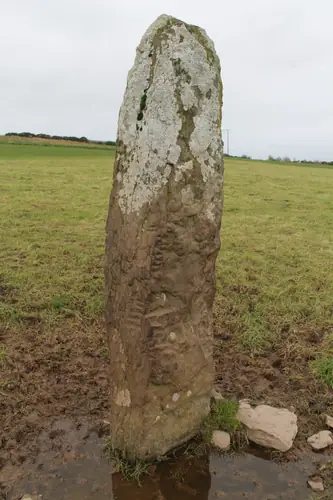
How ogham stones were carved reveals a rough, hands-on craft, not fine monumental lettering. Point chisels for pocking, flat chisels for cleaner V-cuts, and almost no surface prep. A real example from Monataggart, Co. Cork, shows the technique up close.
Ogham stones in England are rare but real. From a Roman well at Silchester to a Viking-age silver brooch near Harrogate, here's how Ireland's ancient script ended up on English soil, and the specific stones you can still see today.
An 1835 manuscript of Irish tales — complete with Ogham writing and a study of the Kilnasaggart Stone — just sold for ten times its estimate. Here's the remarkable story behind it.